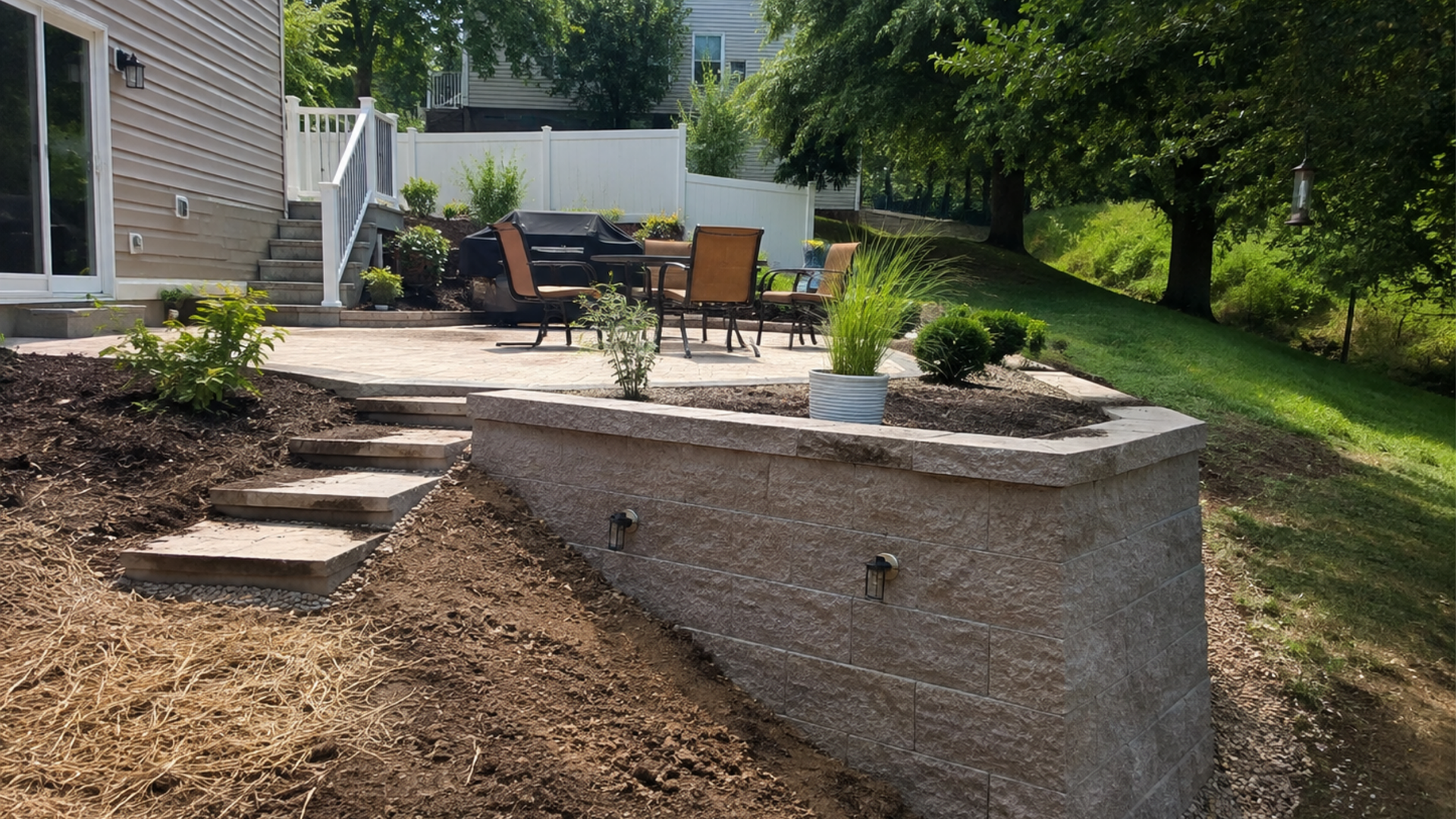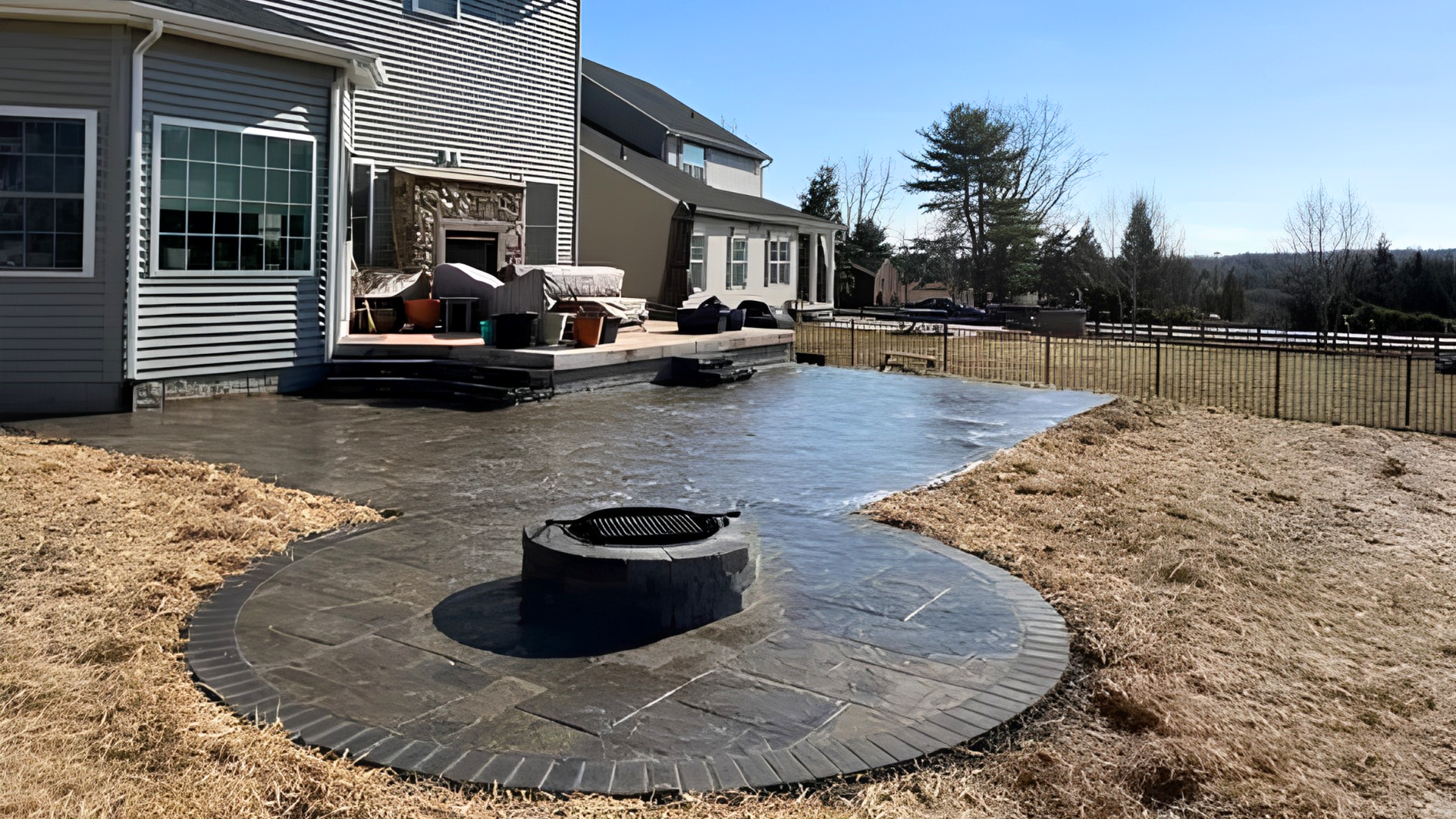
Building an Outdoor Kitchen on a Concrete Patio in Frederick, MD
Expanding your backyard living space with a dedicated cooking area is one of the best ways to improve both your lifestyle and your property value. When planning an outdoor kitchen concrete Frederick homeowners need to prioritize a durable structural foundation that can comfortably support heavy built-in appliances and stone veneer masonry. Between summer humidity, sudden thunderstorms, and hard winter freeze-thaw cycles, Frederick County properties place real demands on any outdoor surface. A properly engineered concrete patio gives your kitchen the load capacity, drainage control, and long-term stability that timber decks and loose paver systems simply cannot match.
This guide walks through everything you need to plan the project with confidence, from slab design and layout choices to finish options, cost ranges, timelines, and how to work with the right contractor from day one.
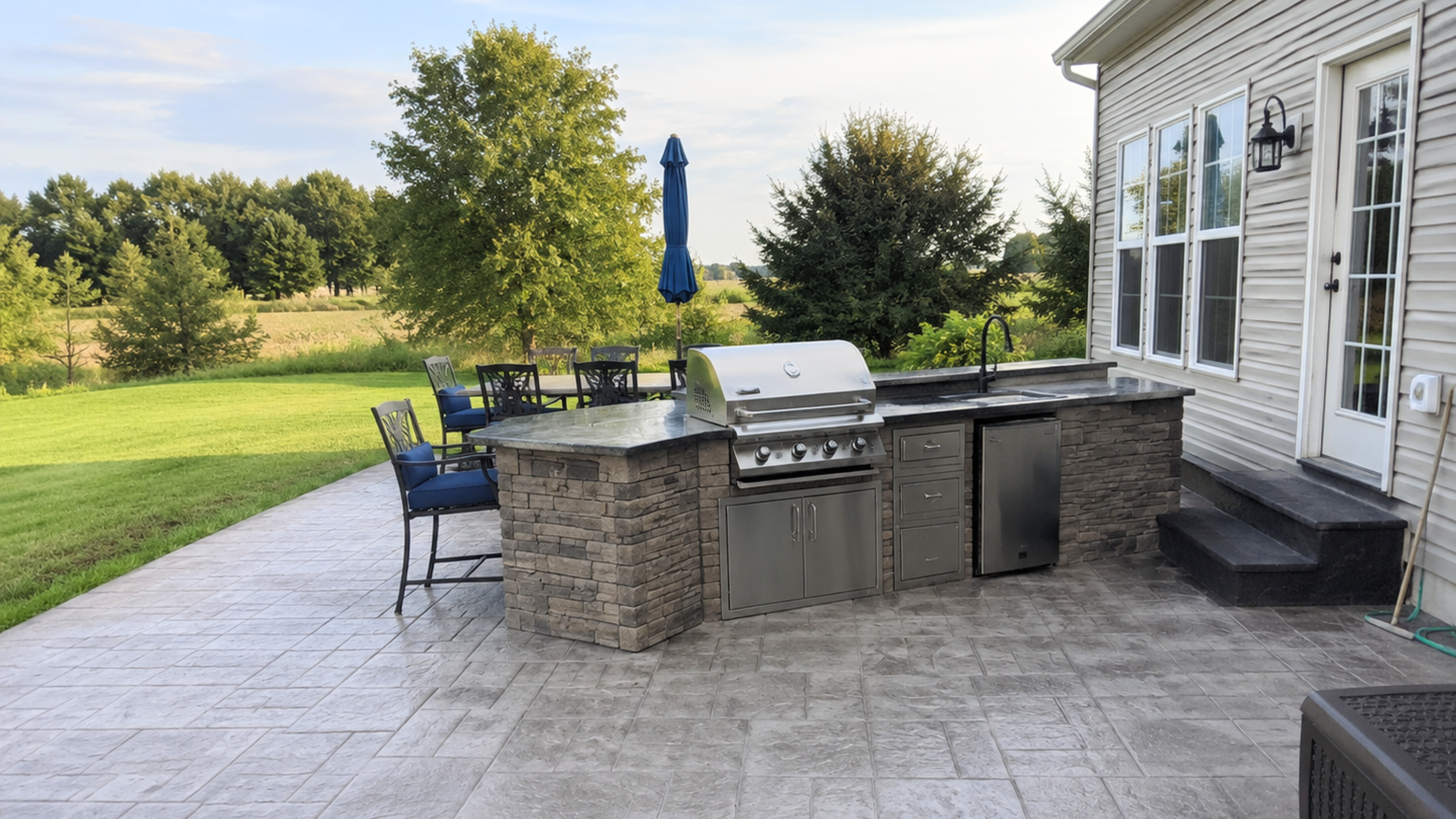
Why Concrete Is the Right Foundation for a Frederick Outdoor Kitchen
An outdoor kitchen packed with heavy stone masonry, built-in grills, and concrete or granite countertops applies immense concentrated weight on the surface below. A single stone-veneered kitchen island with a built-in gas grill and side burner can easily exceed 1,500 pounds before you add appliances, countertops, or seating. If that load sits on top of unstable or poorly compacted soil, the slab underneath will crack, settle, or shift under Maryland's winter frost movement.
Concrete gives you three things a paver base or wood deck cannot. First, it distributes the point loads from your kitchen structure across a wide, continuous surface. Second, it provides a monolithic, sealed footprint that resists water infiltration into the subgrade. Third, it allows precise integration of anchor points, plumbing sleeves, and electrical conduits during the pour, which keeps the finished project clean and code compliant.
For Frederick County properties, that structural reliability matters more than most homeowners realize. Our region sits inside USDA plant hardiness zone 6b and 7a, with expansive clay-heavy soils that swell when wet and shrink when dry. Without an engineered concrete slab underneath, the seasonal movement in that soil will telegraph straight up through your masonry within a few winters.
Frederick's Climate Challenges and Why Your Slab Design Matters
Frederick County sees about 40 to 55 freeze-thaw cycles each year, according to NOAA regional climate data. Every one of those cycles causes water inside any porous surface to expand by roughly 9 percent as it freezes, then contract as it thaws. That cyclic stress is the single biggest reason outdoor concrete fails in our region.
Deep Winter Frost
Maryland's frost line for building code purposes typically ranges from 24 to 30 inches. Anything structural has to be tied to footings below that depth, or it will heave.
Heavy Summer Thunderstorms
Frederick sees intense downpours from June through September. Your slab needs positive drainage away from the house, from any wood-framed structures, and from the kitchen itself.
Humidity and Organic Staining
Grease, food debris, and moisture create staining challenges that require sealed, non-porous surfaces or regular resealing on stamped finishes.
Snow Load and De-Icing Salt Exposure
Any concrete near a walkway or driveway will get salt exposure. Air-entrained concrete mixes are essential for surface durability.
A contractor who understands these regional factors will spec the mix design, reinforcement, and joint layout to match. A contractor who treats every job the same regardless of climate will hand you a slab that cracks within three years.
Concrete Slab Requirements for a Load-Bearing Outdoor Kitchen
The minimum specs for a residential patio are not enough for a patio that will support a full outdoor kitchen. Here is a practical breakdown of what a properly engineered kitchen-ready slab looks like in Frederick County.
| Component | Recommended Specification |
|---|---|
| Slab thickness | 5 to 6 inches minimum under kitchen footprint; 4 inches acceptable for open patio area |
| Concrete strength | 4,000 to 4,500 psi, air-entrained |
| Reinforcement | #4 rebar on 16 to 18 inch grid, or 6x6 W2.9xW2.9 welded wire mesh |
| Fiber additive | Synthetic macro or micro fibers to reduce plastic shrinkage cracking |
| Base preparation | 4 to 6 inches of compacted crushed stone (CR-6 or #57), over undisturbed subgrade |
| Thickened edge / footing | 12 inch minimum edge thickening under kitchen structure; deeper footings for wood-burning fireplaces or pizza ovens |
| Control joints | Every 8 to 10 feet, at 1/4 slab depth |
| Slope for drainage | 1/8 to 1/4 inch per foot away from home |
| Vapor barrier | Recommended if slab is against an existing structure or under a covered pergola |
Because built-in grills and heavy stone counters exert concentrated weight on a surface, attempting a standard DIY pour can quickly lead to settling and surface cracking. Working with a professional
Frederick concrete contractor ensures that your subgrade is excavated, graded, and reinforced correctly. The best
outdoor kitchen concrete Frederick installations use fiber-reinforced mixes and precise expansion joints to handle Maryland's freezing winters and humid summers without shifting.
Layout Planning: Key Considerations Before You Design
The most common regret we hear from homeowners is not about materials or budget. It is about layout. A kitchen island placed in the wrong spot creates smoke drift toward the house, blocks the view of the yard, or forces guests to walk through the cook's workspace.
Distance from the House
Give yourself at least 10 feet of clearance between grills and combustible siding, and 15 feet is safer. If you are working within a tighter footprint, plan for a fire-rated backing behind the cook zone.
Prevailing Wind Direction
In Frederick County, summer winds typically come from the southwest. Orient your grill and smoker so smoke drifts away from seating areas and the house.
Sun and Shade
South-facing patios get intense sun from May through September. A pergola or shade structure can double the usable hours of your kitchen from May through October.
Utility Runs
Gas, water, and 20-amp electrical circuits should be sleeved through the slab during the pour. Retrofitting utilities into a finished slab is expensive and messy.
Traffic Flow
Guests should be able to walk from the house to seating without crossing the cook's work zone. A straight-line, L-shape, or U-shape kitchen keeps circulation clean.
Three Outdoor Kitchen Layouts That Work for Frederick Backyards
Once you have the site considerations locked in, the next decision is the shape of the kitchen itself. These three layouts cover the vast majority of Frederick County backyard installations.
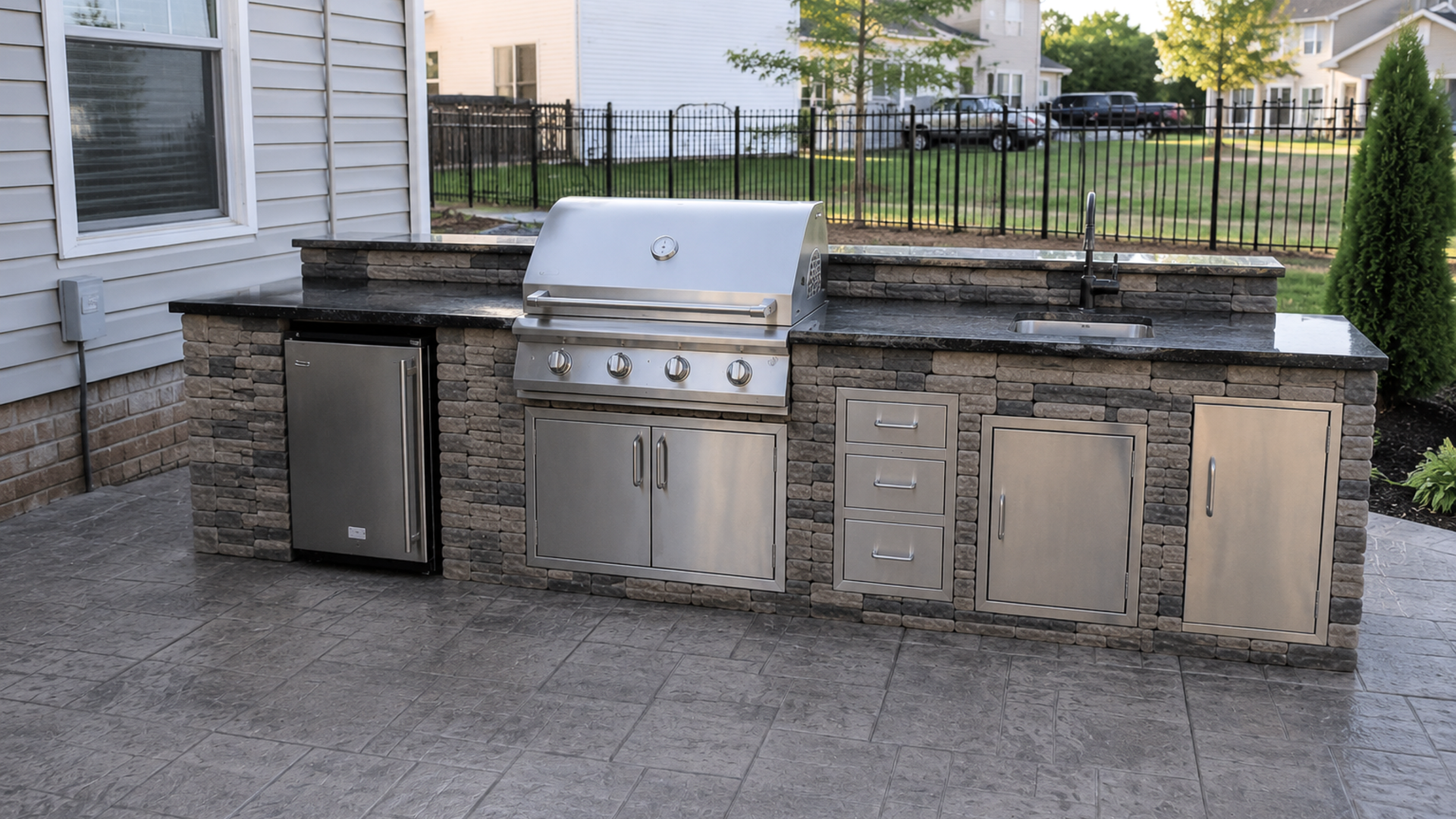
Linear Layout
The linear layout runs the kitchen along one edge of the patio, typically 10 to 14 feet long. It is the most affordable option and works best when the patio is against the house, since the kitchen becomes a natural extension of the wall.
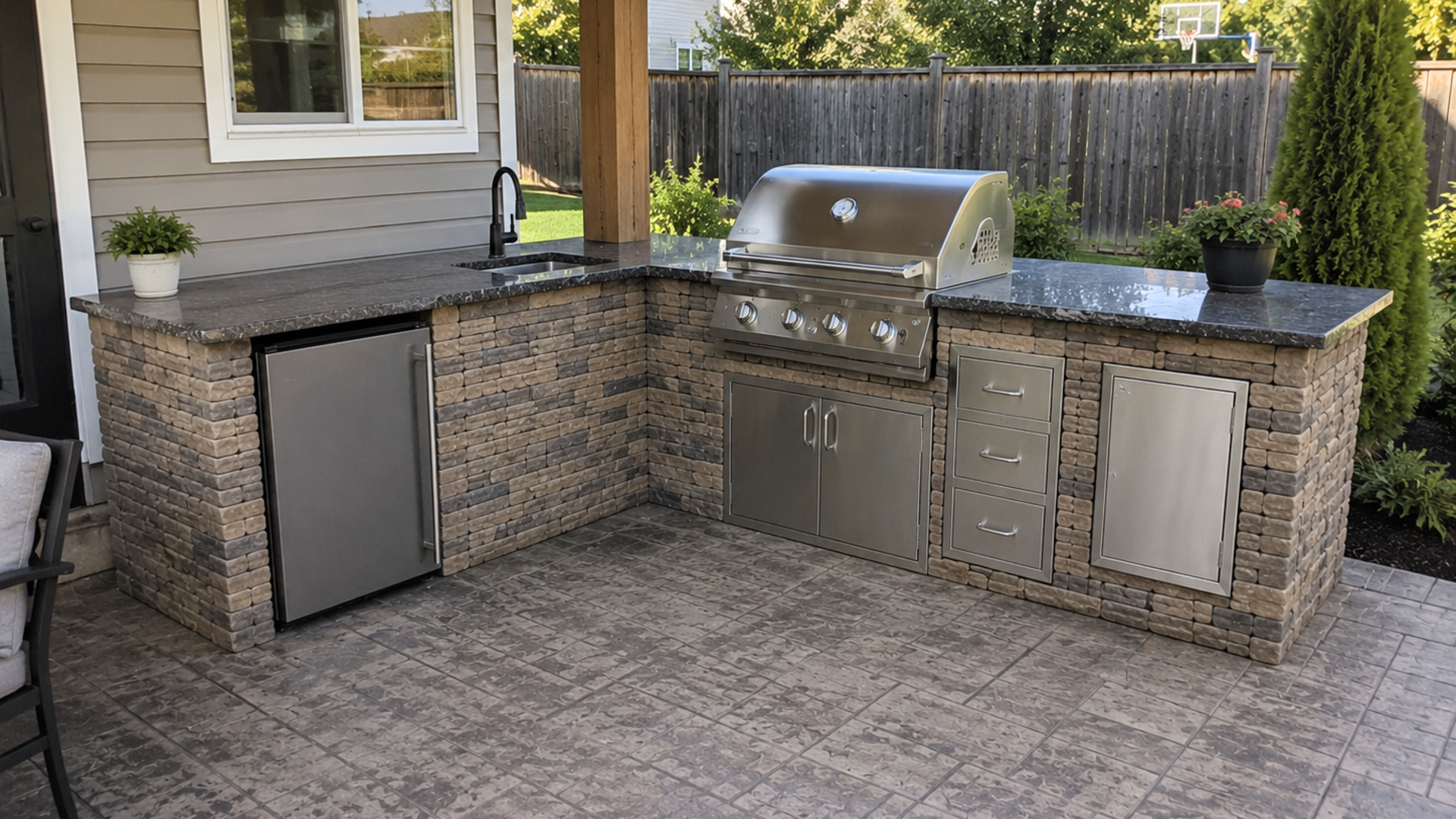
L-Shape Layout
The L-shape layout uses two connected runs to define both cooking and prep zones. This is the most popular option for entertaining because it creates a natural conversation area on one side while the cook works on the other.
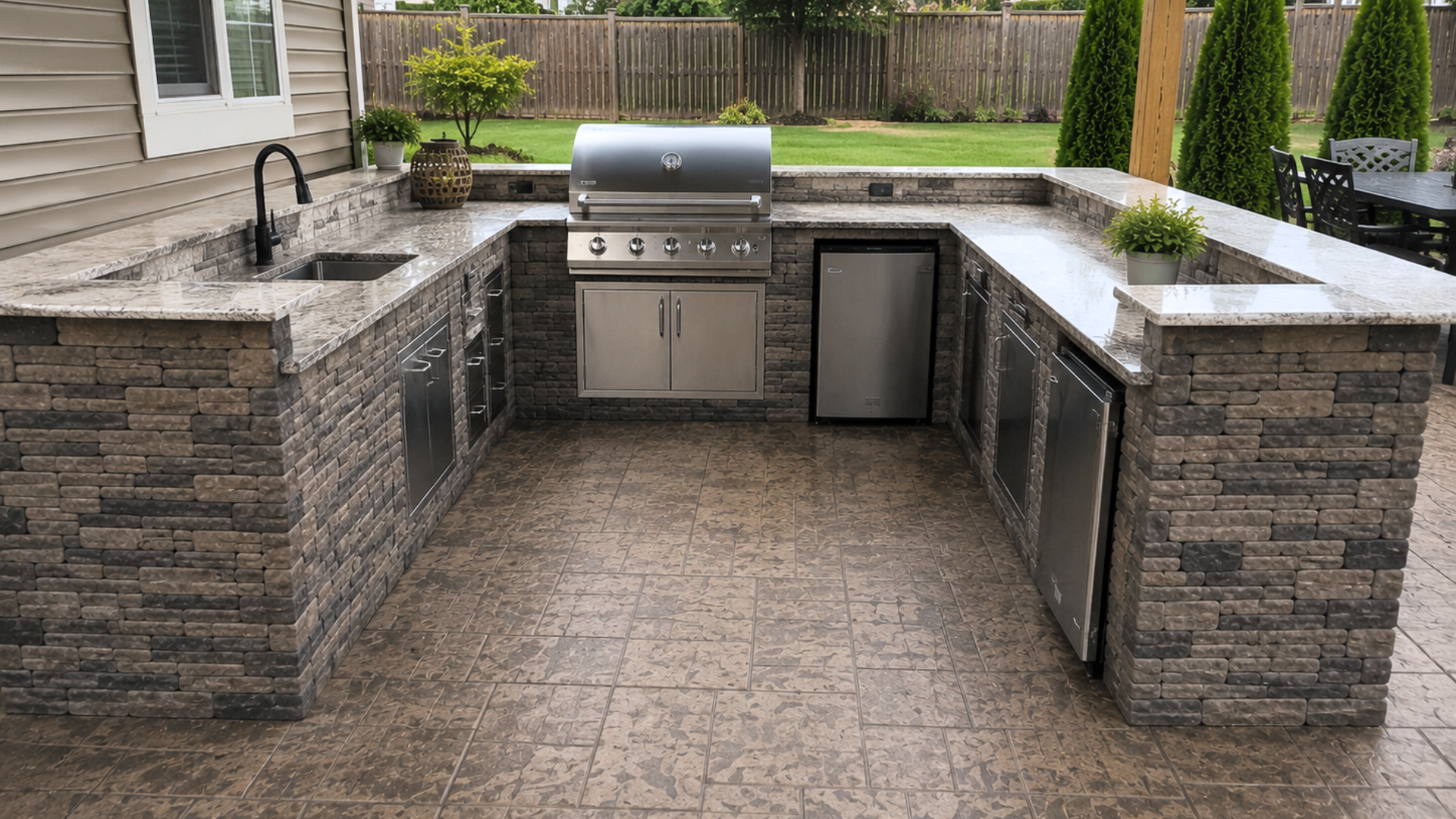
U-Shape Layout
The U-shape layout wraps the cook on three sides and creates a defined outdoor room. It requires the largest slab footprint but delivers the most functional workspace, with dedicated zones for cooking, prep, and cleanup.
Popular Outdoor Kitchen Features Frederick Homeowners Are Choosing
Once the slab and layout are locked in, the fun part starts. These are the features we see requested most often across Frederick, Walkersville, Thurmont, and Hagerstown installations.
Built-In Gas Grills
Built-in gas grills remain the anchor of most outdoor kitchens. A 36 to 42 inch grill is the sweet spot for family and small-group entertaining.
Side Burners and Power Burners
Side burners and power burners add flexibility for sauces, sides, and outdoor wok cooking.
Refrigeration Drawers and Outdoor Refrigerators
Refrigeration drawers or a full outdoor refrigerator reduce trips back to the indoor kitchen. Look for units rated for outdoor use, which have better insulation and weather-sealed compressors.
Pizza Ovens
Pizza ovens have surged in popularity. Wood-fired and gas hybrid ovens need extra structural support and should be spec'd into the slab design from the start.
Prep Sinks
Prep sinks require a plumbed water line and drain, plus winterization access for our cold months.
Bar Seating and Countertop Overhangs
Bar seating and countertop overhangs turn the kitchen into a social hub. Plan for at least 12 inches of overhang for comfortable seating.
Storage Cabinets
Storage cabinets in stainless steel or masonry keep tools and propane tanks out of sight while remaining weather-resistant.
Integrated Lighting and Outlets
Integrated lighting and 20-amp outlets add both function and safety for evening use.
Stamped Concrete Finishes That Complement Stone Outdoor Kitchens
The patio surface around the kitchen has just as much visual impact as the kitchen itself. Plain broom-finished concrete is functional and affordable, but many Frederick County homeowners want a surface that complements the high-end look of stone veneer and stainless appliances.
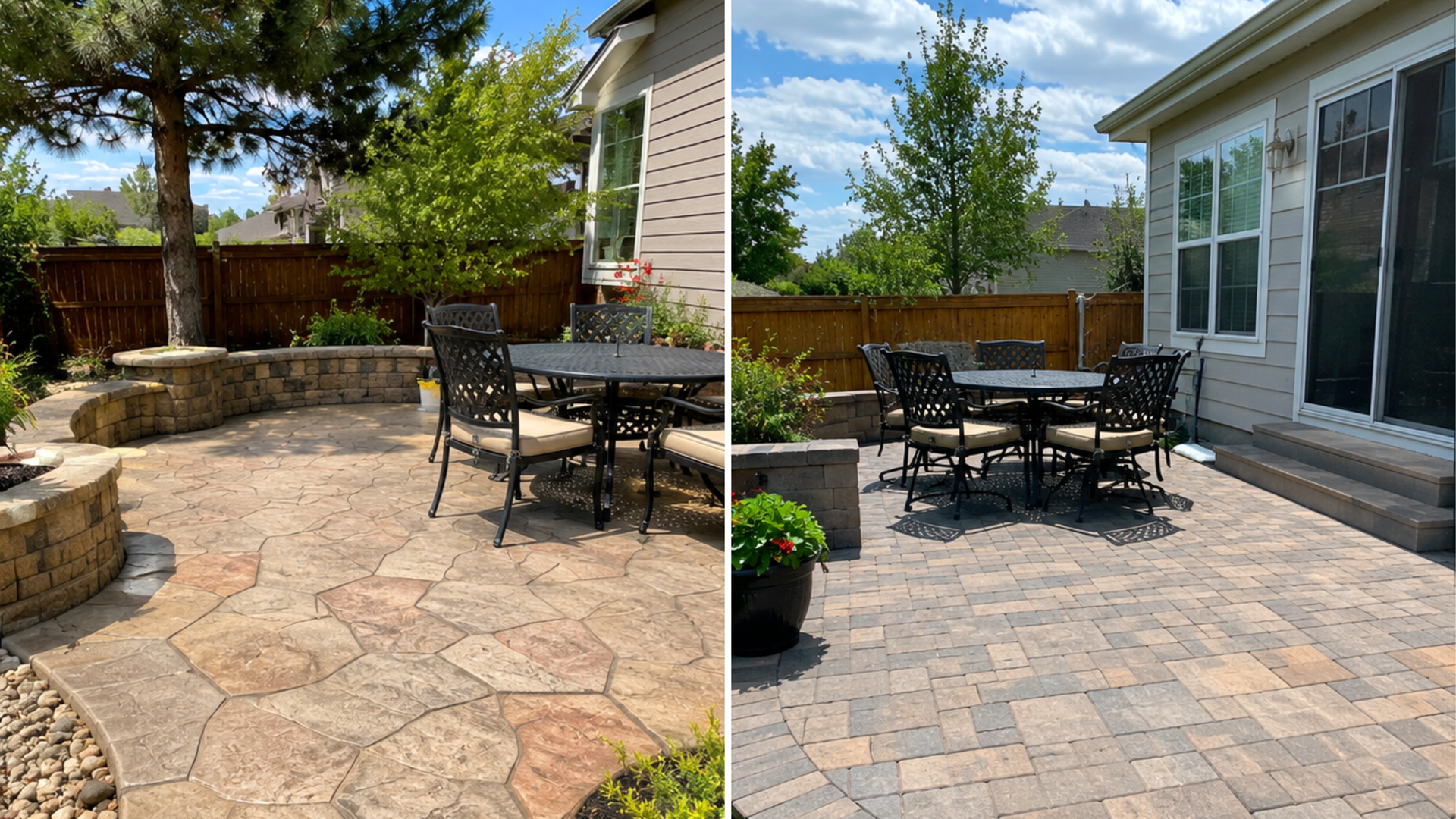
Stamped concrete offers the appearance of natural stone, brick, slate, or wood plank at a lower installed cost than the equivalent real material. It uses the same structural pour as your kitchen slab, then adds pattern and color at the finishing stage. That means you get the durability of poured concrete with the visual detail of premium masonry.
| Stamped Finish Style | Best Paired With |
|---|---|
| Ashlar slate | Fieldstone or dry-stack stone veneer kitchens |
| Random flagstone | Rustic or farmhouse-style outdoor rooms |
| European fan cobblestone | Traditional brick veneer kitchens |
| Herringbone brick | Colonial or classic architectural styles |
| Wood plank finish | Modern kitchens with stainless steel and clean lines |
| Broom finish with borders | Contemporary minimalist designs |
Color options range from soft gray earth tones that stay cool underfoot in summer to warm tan and brown blends that highlight stone veneer detail. A
quality decorative concrete installer will apply base color, accent release color, and a UV-resistant sealer to lock in the pattern and reduce fading over time.
Cost Considerations for a Frederick Outdoor Kitchen on Concrete
Outdoor kitchen budgets vary widely based on square footage, appliance selection, and finish level. The ranges below reflect what property owners in Frederick County can realistically expect for a fully installed project, including the concrete patio slab, structural masonry, appliances, and finishing.
| Project Tier | Slab Cost | Kitchen Cost | Notes |
|---|---|---|---|
| Entry-level (linear kitchen, standard finish) | $4,500 to $8,500 | $8,000 to $15,000 | Built-in grill, storage, broom-finished patio |
| Mid-range (L-shape, stamped patio) | $8,500 to $14,000 | $15,000 to $28,000 | Grill, side burner, fridge, stone veneer, stamped concrete |
| Premium (U-shape, decorative finish) | $14,000 to $22,000 | $28,000 to $50,000 | Grill, pizza oven, sink, full stone masonry, decorative concrete |
| Luxury (large entertainment build) | $22,000+ | $50,000+ | Full entertainment build with pergola, fireplace, bar seating, custom stone |
Several factors push a project toward the higher end of these ranges: sloped or difficult sites requiring extra grading, high-end appliance packages, natural stone countertops rather than concrete or tile, custom masonry work, and integrated pergola or roof structures.
Project Timeline: What to Expect from Planning to First Cookout
A well-run outdoor kitchen project moves through predictable phases. Rushing any of them creates problems that show up months or years later.
Design and Estimate: 1 to 3 Weeks
Site visit, layout planning, appliance selection, and detailed written estimate.
Permits and Utility Coordination: 2 to 4 Weeks
Frederick County permits vary by scope. Gas and electrical work typically requires inspection, and permit timing can add two or three weeks to the front end of the project.
Site Preparation and Excavation: 2 to 4 Days
Removal of existing surfaces, grading, base preparation, and compaction.
Slab Pour and Cure: 5 to 10 Days
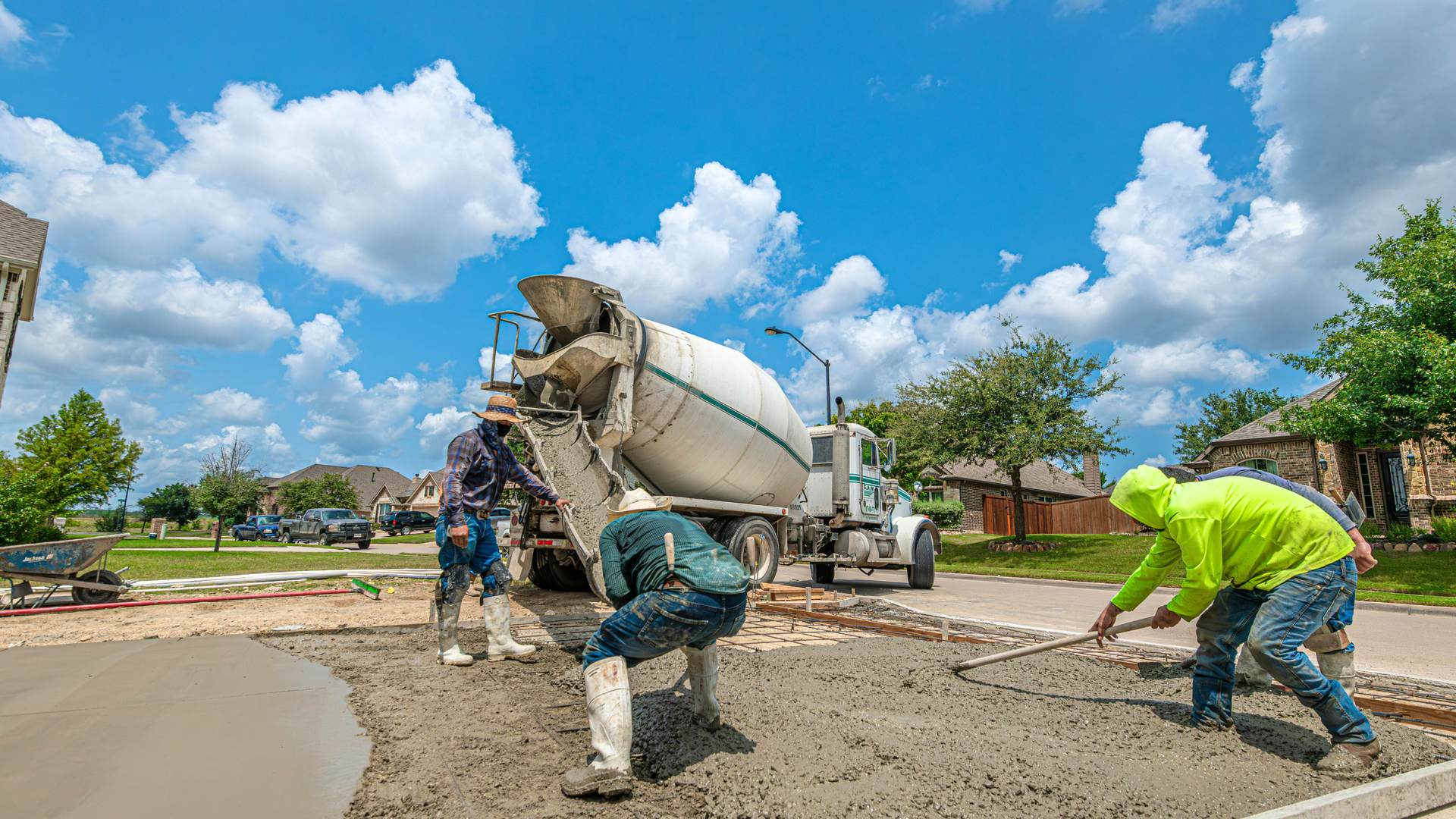
Formwork, reinforcement placement, utility sleeving, pour, finishing, and initial cure. Concrete gains most of its strength within seven days but continues curing for 28 days, and your contractor will time subsequent phases around that.
Masonry, Appliances, and Finishes: 1 to 3 Weeks
Stone veneer installation, countertop template and install, appliance integration, and final connections.
Final Inspection and Walkthrough: 1 to 2 Days
Punch list review, final connections tested, sealer applied where needed, and site cleanup. Most complete outdoor kitchen projects run 6 to 10 weeks from signed contract to first cookout, depending on complexity and weather.
Maintenance and Winter Prep for Your Concrete Outdoor Kitchen
The best time to think about long-term care is before the pour, not after. A few simple habits will keep your investment looking great for decades.
- Reseal stamped concrete every 2 to 3 years using a UV-resistant, breathable sealer designed for exterior use.
- Clean grease and food stains promptly with a mild degreaser. Avoid acidic cleaners on stamped and decorative finishes.
- Shut off water to any outdoor plumbing before the first hard freeze. Blow out lines with compressed air where possible.
- Cover appliances during the off-season, even those rated for outdoor use. UV exposure and moisture wear down stainless finishes over time.
- Inspect control joints and caulking each spring. Recaulk any joints that show separation to prevent water intrusion.
- Salt sparingly on adjacent walkways. Sand or calcium magnesium acetate are gentler alternatives that will not degrade your concrete surface.
Choosing an Experienced Frederick Concrete Contractor
The single biggest predictor of whether your outdoor kitchen will still look and perform well in a decade is the quality of the concrete work underneath. Every other component sits on top of that slab, so a mistake at the foundation level cascades through the entire project.
When you interview contractors, ask about their approach to subgrade preparation, mix design, reinforcement, and control joints. Ask how they handle utility sleeving. Ask to see recent projects that have been through at least two winters. A confident contractor will answer these questions clearly and back the answers up with photos or a site visit.
Prostamp Concrete has spent more than a decade building patios, driveways, decorative finishes, and outdoor living surfaces across Frederick County, Walkersville, Thurmont, Hagerstown, and Waynesboro. Every project follows a structured process that keeps the site organized, the timeline clear, and the finished work aligned with what was discussed on the first estimate. If you are ready to plan an outdoor kitchen concrete Frederick project on a slab built to last, we can walk you through the layout, structural, and finish decisions in a single site visit.
Frequently Asked Questions
Can I put an outdoor kitchen on an existing concrete patio?
Sometimes, but not always. The existing slab needs to be at least 5 inches thick, in good condition without cracking or settling, and properly graded for drainage. A contractor should evaluate the slab, check the base, and confirm it can carry the added load before you build on it. In many cases, homeowners choose to pour a new dedicated slab because the long-term reliability is worth the added investment.
How thick does the concrete slab need to be under an outdoor kitchen?
For a kitchen with built-in grills, storage, and stone veneer, plan for a 5 to 6 inch slab reinforced with rebar or welded wire mesh, sitting on 4 to 6 inches of compacted crushed stone. If you are adding a pizza oven, fireplace, or heavy natural stone masonry, thickened footings or a deeper edge slab may be required to distribute the load safely.
Do I need permits to build an outdoor kitchen in Frederick County?
Permit requirements vary based on the project scope. Structural concrete work, gas lines, and electrical connections almost always require permits and inspections in Frederick County. A licensed contractor will identify what is needed and handle the coordination as part of the project timeline.
Will freeze-thaw cycles crack my concrete kitchen slab?
A properly designed slab using air-entrained concrete, correct reinforcement, and well-placed control joints resists freeze-thaw damage very well. Problems occur when the base is poorly compacted, when the mix is not rated for exterior exposure, or when control joints are missing or spaced too far apart. Sealing stamped finishes every 2 to 3 years also helps.
Can stamped concrete match the look of my stone veneer kitchen?
Yes. Modern stamping patterns and color systems can very closely replicate slate, flagstone, cobblestone, and brick. A skilled installer will coordinate the patio color and pattern with the stone veneer of the kitchen so the whole outdoor room feels intentional rather than assembled from separate pieces.
How long will an outdoor kitchen on a concrete patio last?
A properly installed concrete slab lasts 30 to 50 years or more with routine maintenance. Stone veneer and masonry structures last just as long. The shorter-lifespan components are appliances (10 to 15 years) and sealers (2 to 3 years between reapplications). Overall, a well-built outdoor kitchen is a long-term investment that keeps performing for decades.
Ready to Plan Your Frederick Outdoor Kitchen
An outdoor kitchen built on a properly engineered concrete patio is one of the highest-value additions you can make to a property. It expands your usable living space, creates a natural gathering spot, and, when done right, holds up beautifully through decades of Maryland weather. The key is getting the foundation right the first time, choosing a layout that matches how you actually entertain, and selecting finishes that complement both your home and your outdoor lifestyle.
Prostamp Concrete has built outdoor patios, decorative finishes, and outdoor kitchen foundations across Frederick, Walkersville, Thurmont, Hagerstown, and Waynesboro. We will walk your property, review your layout ideas, and give you a clear written estimate that covers every phase of the project from site prep through final finishing. Call (240) 803-7830 or request an estimate online to get started.