Building a Concrete Fire Pit Patio in Frederick, MD: The Complete Guide
A well-designed backyard fire feature extends your outdoor season from early spring into late fall and turns your patio into a year-round destination. When planning a concrete fire pit patio Frederick, MD homeowners need to think beyond the flame and start with what sits underneath it, because the slab, reinforcement, and heat protection details determine whether the finished patio holds up for decades or shows cracks and surface damage inside a single season. Frederick County's freeze-thaw cycles, clay-heavy soils, and humid summers all place real demands on outdoor concrete, and radiant heat from a fire feature multiplies the stress. This guide covers the structural, thermal, and design decisions that separate a fire pit patio built to last from one that disappoints by year two.
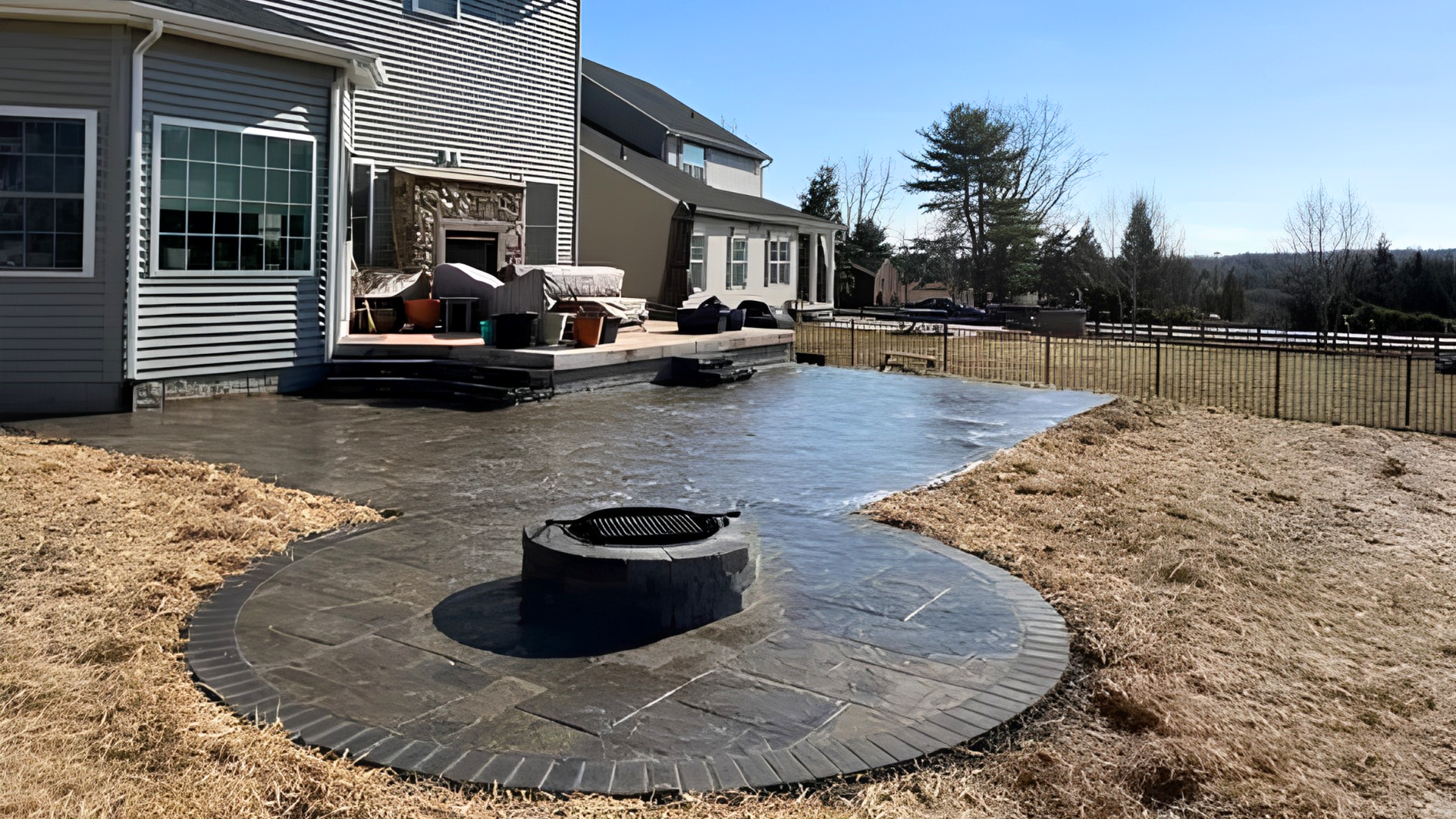
Why Concrete Is the Right Foundation for a Frederick Fire Pit Patio
Concrete handles the load, heat, and weather demands of a permanent fire pit better than pavers, decking, or crushed stone bases, which is why it remains the default choice for serious fire pit installations across Frederick County.
Structural Load Under Sustained Heat Cycles
A masonry fire pit with stone veneer, a steel firebowl, and a wide seat wall can exceed 2,000 pounds concentrated in a footprint of just a few square feet. That load sits on the same slab you walk on. Without proper reinforcement, the load combined with heating and cooling cycles will pull the slab apart at the weakest point.
Fire Safety and Non-Combustible Surfaces
Concrete is non-combustible, which matters more than most homeowners realize. Even a well-managed fire produces sparks and radiant heat that can ignite dry grass, mulch, or wood decking within a few feet of the flame. A concrete patio creates a defined safe zone that pavers on sand or a wood-framed deck cannot match.
Freeze-Thaw Durability Around a Heat Source
Frederick County sees about 40 to 55 freeze-thaw cycles each year based on NOAA regional data. Around a fire pit, that stress compounds because the concrete near the flame heats and cools far more dramatically than the rest of the patio. Air-entrained mixes, proper joint placement, and quality sealers are what keep the surface intact.
Built-In vs Standalone Fire Pits: Choosing the Right Feature for Your Patio
Both built-in and standalone fire pits work well on concrete, but they carry very different structural, permitting, and design implications.
Built-In Masonry Fire Pits
A built-in fire pit is a permanent part of the patio, usually with stone veneer or brick wrapped around a steel or refractory core. It gives you the most polished, integrated look and typically ties into seat walls or an outdoor kitchen zone. Built-ins need a dedicated footing, permit review, and coordination with the patio pour, so they belong in the design from day one.
Standalone Steel or Cast Iron Fire Bowls
Standalone units drop onto a finished patio and can be moved seasonally. They cost less, involve less permitting, and let you change layout later. The tradeoff is a shorter useful life since exposed steel weathers faster than masonry. Standalone bowls still need heat protection under them to preserve a decorative stamped finish.
Gas vs Wood-Burning Fuel Type
Gas fire pits require a plumbed line, shutoff valve, and permitted connection sleeved through the slab during the pour. Wood-burning pits need no utilities but generate more heat, sparks, and ash cleanup. Gas is cleaner and easier to light on a cold evening; wood delivers the traditional fire experience. The fuel choice drives the structural, ventilation, and clearance decisions that follow.
Structural Reinforcement Under a Concrete Fire Pit Patio
The table below reflects the recommended baseline for Frederick County fire pit patios that need to carry a permanent feature, seat walls, and repeated thermal cycles.
| Component | Recommended Specification |
|---|---|
| Patio slab thickness | 5 to 6 inches minimum across the patio area |
| Slab thickness under fire pit | 6 to 8 inches with a thickened footing ring below |
| Concrete strength | 4,000 to 4,500 psi, air-entrained |
| Reinforcement | #4 rebar on 16 inch grid, doubled under fire pit footprint |
| Fire pit footing | 12 inch minimum depth ring footing tied to rebar grid |
| Fiber additive | Synthetic macro or micro fibers to reduce plastic shrinkage cracking |
| Base preparation | 4 to 6 inches of compacted crushed stone (CR-6 or #57), over undisturbed subgrade |
| Control joints | Every 8 to 10 feet, positioned to avoid crossing under the fire pit itself |
| Slope for drainage | 1/8 to 1/4 inch per foot away from home |
| Gas line sleeve | Required if gas fuel is planned; sleeved through slab during pour |
Control joint placement is the detail most often mishandled on fire pit patios. Running a joint through the fire pit footprint creates a crack path right where heat stress concentrates. A skilled contractor lays out joints so the fire pit sits within a continuous slab section.
Thermal Heat Barriers That Protect Your Decorative Stamped Concrete
Adding a fire feature to a stamped patio without heat management is one of the most common ways homeowners damage decorative finishes. The pattern, color, and sealer are all sensitive to sustained high temperatures that a wood-burning pit can easily push past.
Why Direct Heat Damages Stamped Finishes
Stamped concrete sealers start softening between 150 and 200 degrees Fahrenheit, and integral color pigments can shift or fade with repeated high-heat exposure. Direct contact with a hot fire bowl can also cause thermal shock cracking in the top inch of the slab, where color and stamping detail live.
Steel Fire Rings and Liners
A steel fire ring sits inside the masonry surround and holds the burning material away from the outer stone. The ring radiates heat outward and upward rather than down into the slab. Quality built-in pits use a 1/4 inch or thicker mild steel ring sized to the pit interior with a small air gap to the surrounding masonry.
Refractory Brick and Firebrick Bases
For wood-burning pits, a refractory brick or firebrick base protects the slab underneath the burn zone. Firebrick is rated for direct flame exposure and thermal shock and insulates decorative concrete from the fire. It is set in refractory mortar, which is designed to withstand temperature cycling without cracking.
Air Gap Design and Insulation
A small engineered air gap between the burn zone and the outer masonry helps dissipate heat and prevents the outer stone from cracking. On gas pits, a lava rock or fire glass bed serves the same function. All barrier layers should be planned before the patio pour, not retrofit later.
Fire Pit Patio Layout Styles for Frederick County Backyards
The shape of the seating footprint drives conversation flow, heat distribution, and how the patio integrates with the rest of the backyard. These three layouts cover most Frederick County installations.
Round Seating Layout
A round layout centers a circular fire pit inside a matching round patio. It is the most social configuration because every seat has an equal view of the flame. Typical dimensions run a 36 to 48 inch fire pit inside a 12 to 16 foot diameter patio, which seats six to eight adults with room to walk behind the chairs.
Square Seating Layout
A square layout uses a square or rectangular patio with the fire pit centered inside it. It integrates cleanly with straight house lines and gives defined edges for seat walls or planters. Typical dimensions run a 42 to 60 inch square pit inside a 14 by 14 or 16 by 16 foot patio.
Combined Zones: Fire Pit With Outdoor Kitchen or Dining
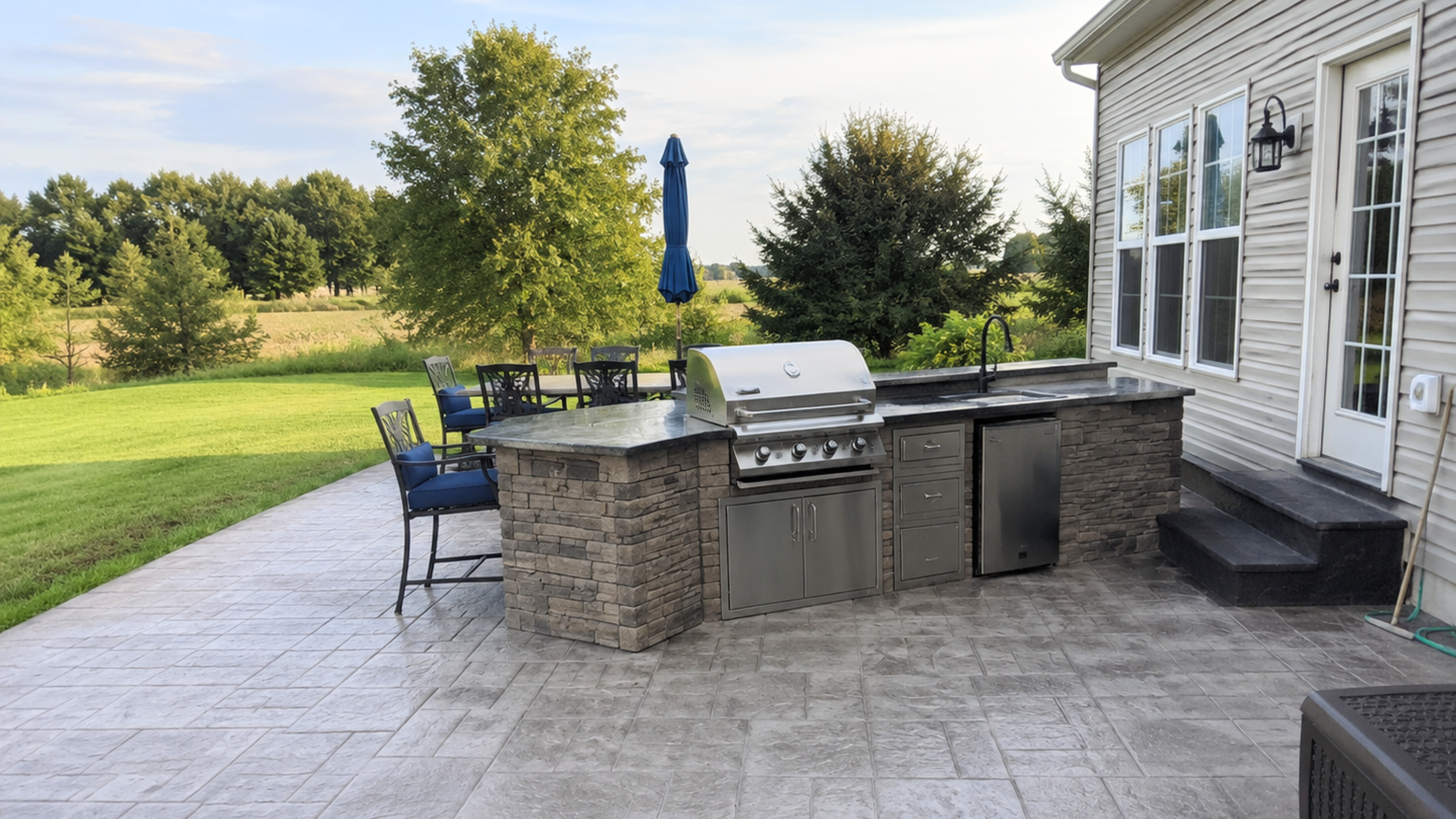
Many homeowners plan the fire pit as one zone within a larger outdoor living space that also includes a cooking area, a covered dining table, or a lounge zone. For a project at that scale, our companion guide on building an outdoor kitchen on a concrete patio in Frederickwalks through the cooking side of the equation. When designed together, the fire pit and outdoor kitchen share the same slab pour, drainage plan, and stamped finish, which delivers a more cohesive result than adding one feature at a time.
Stamped Concrete Finishes That Pair Well With Fire Pits
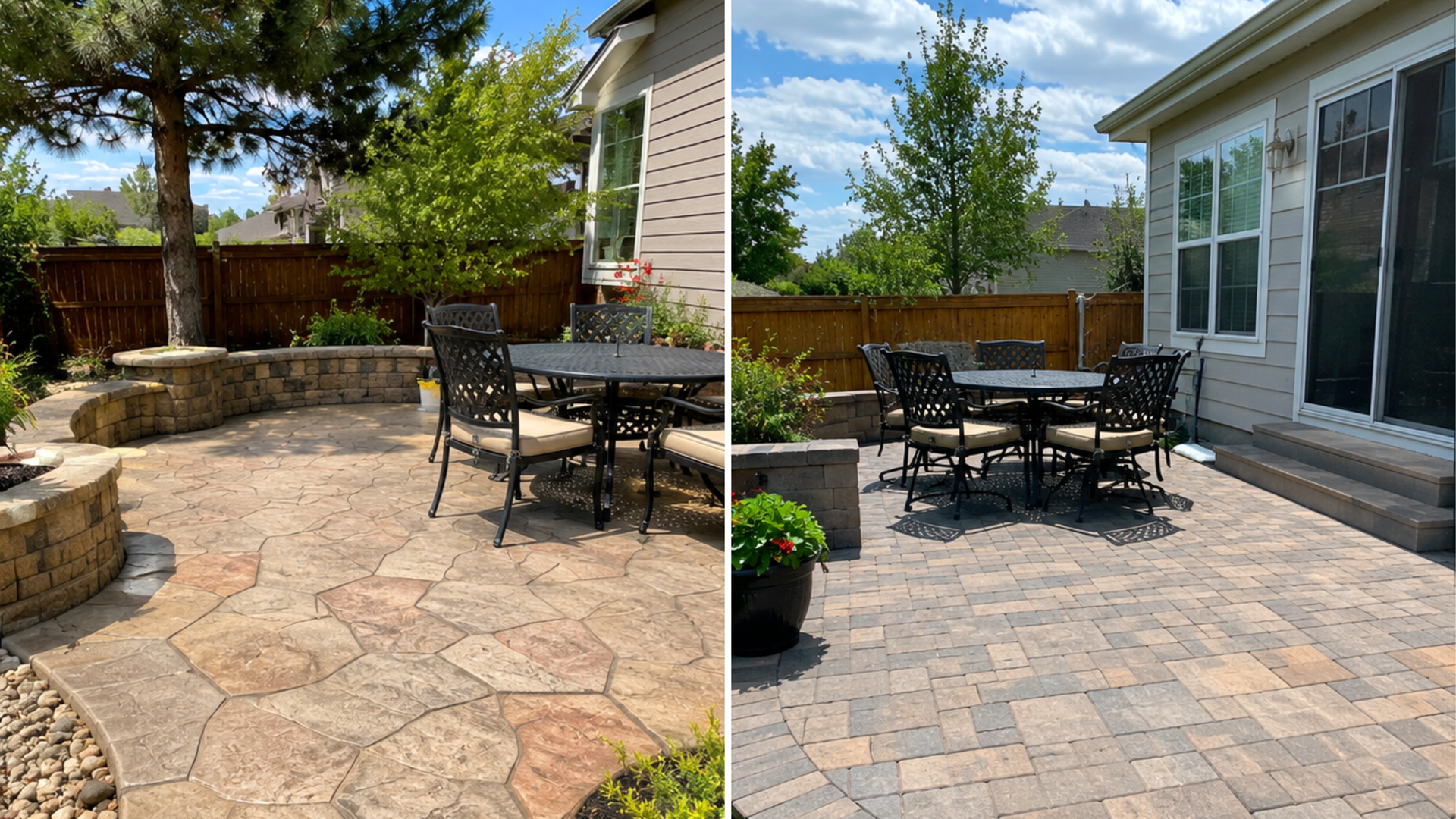
A well-chosen stamped pattern and color makes the fire feature look intentional and settled rather than dropped onto an anonymous slab. These pairings work reliably in Frederick County backyards.
| Stamped Finish Style | Best Fire Pit Pairing |
|---|---|
| Ashlar slate | Fieldstone or bluestone veneer fire pit |
| Random flagstone | Rustic dry-stack stone wood-burning pit |
| European fan cobblestone | Traditional brick or brick-veneer pit |
| Herringbone brick | Colonial-style brick fire pit |
| Wood plank finish | Modern steel or concrete gas fire bowl |
| Broom finish with stone border | Contemporary minimalist gas fire feature |
For any stamped installation around a fire feature, choose a UV-resistant sealer rated for exterior use and higher temperature tolerance. Cheap sealers will yellow, cloud, or peel near the fire pit within a season or two.
Meeting Frederick County Code and Fire Safety Clearances
Fire pit patios are subject to fire safety clearances and, in some cases, local permits. Skipping this step is the fastest way to rebuild a feature you just paid to install.
Distance from Structures and Combustibles
The general standard is 10 feet minimum from any structure, deck, or overhanging tree, with 25 feet recommended for wood-burning pits. Combustible surfaces like wood mulch, dry grass, and cedar fencing need the same clearance. Summer winds in Frederick County come from the southwest, so orient the pit and seating so smoke does not drift toward the house or a neighbor's window.
Property Line and Neighbor Setbacks
Most Frederick County jurisdictions require at least a 10 foot setback from any property line for a permanent fire feature. HOA rules can add stricter setbacks, and some communities require approval for any new hardscape visible from the street. Check both local code and covenants before finalizing the layout.
Frederick County Permits and Gas Line Requirements
Permit requirements vary by scope. A permanent gas line almost always requires a plumbing permit and inspection. Structural concrete work over a certain area typically requires a building permit, and wood-burning pits may fall under open burning ordinances. A licensed contractor identifies what is needed and handles coordination as part of the timeline.
Concrete Fire Pit Patio Cost Ranges in Frederick County
The ranges below reflect what Frederick County property owners can expect for a fully installed project, including the concrete slab, fire feature, structural reinforcement, and stamped finish where applicable.
| Project Tier | Patio Cost | Fire Feature Cost | Notes |
|---|---|---|---|
| Entry-level (small patio, standalone bowl) | $3,500 to $7,000 | $500 to $1,500 | Standalone steel bowl on broom-finished patio |
| Mid-range (stamped patio, built-in masonry) | $7,000 to $14,000 | $2,500 to $7,000 | Wood-burning built-in with stone veneer on stamped concrete |
| Premium (custom stamped, gas feature) | $14,000 to $22,000 | $7,000 to $15,000 | Gas plumbed, stone veneer, seat walls, decorative concrete finish |
| Luxury (integrated outdoor room) | $22,000+ | $15,000+ | Combined with outdoor kitchen, pergola, custom stone, full entertainment |
Site conditions push a project toward the higher end: sloped lots, difficult truck access, high-end natural stone, and integration with existing hardscape.
Project Timeline: From Design to First Fire
A well-run fire pit patio moves through predictable phases. Rushing any of them creates issues that appear months or years later.
Design and Site Assessment: 1 to 3 Weeks
Site visit, layout planning, fire feature selection, and written estimate. This is when your contractor identifies grading, drainage, and clearance issues that affect the design.
Permits and Utility Coordination: 2 to 4 Weeks
Frederick County permit review, gas line coordination if applicable, and any HOA approvals required for the project.
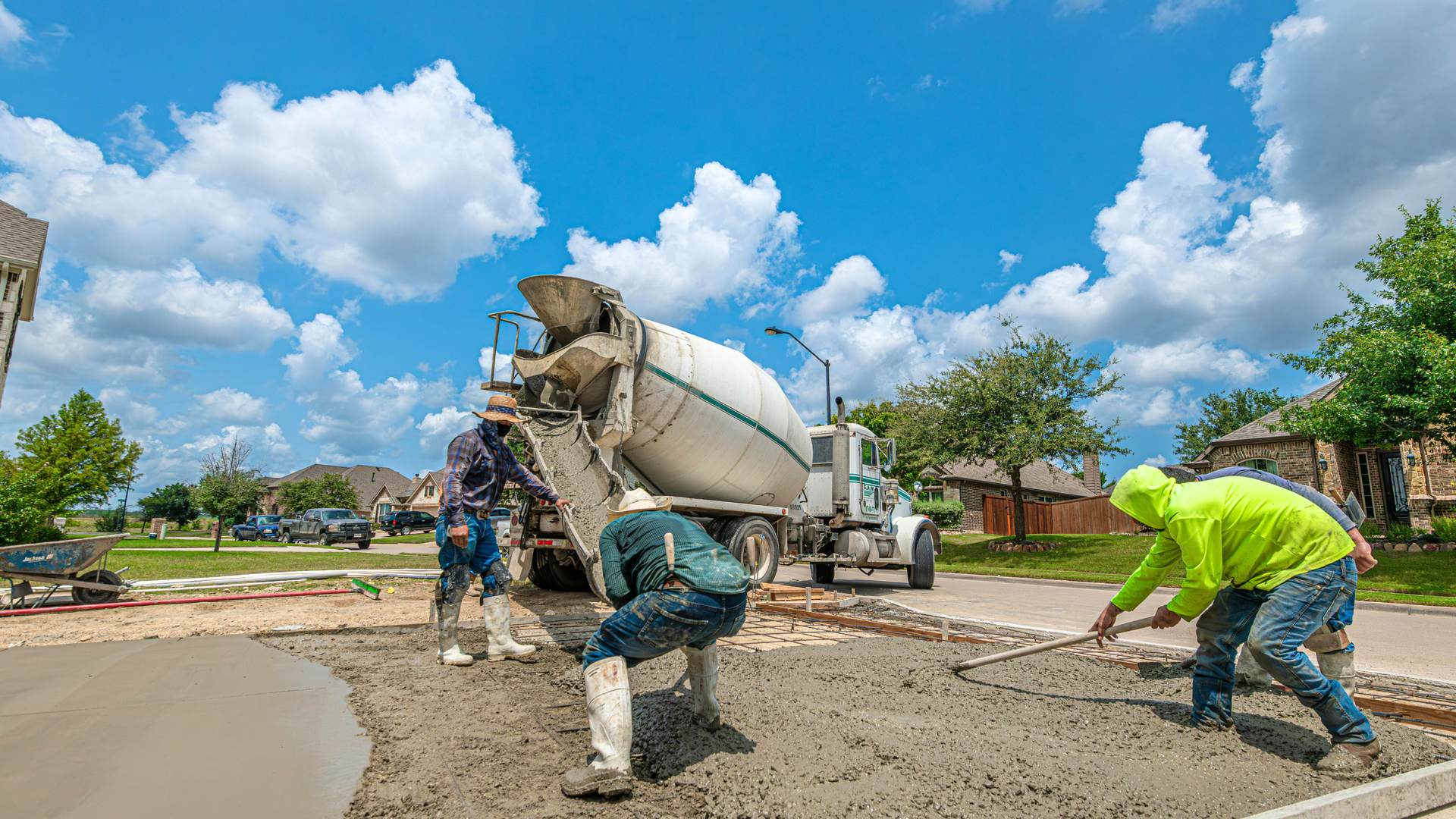
Site Prep and Slab Pour: 1 to 2 Weeks
Removal of existing surfaces, grading, base preparation, formwork, reinforcement placement, gas line sleeving, and the pour itself.
Fire Pit Construction and Stamped Finishing: 1 to 2 Weeks
Firebrick base installation, masonry surround construction, stone veneer application, stamped pattern and color work on the surrounding patio, and sealer application.
Cure Time and Final Inspection: 1 to 4 Weeks
Concrete gains most of its strength within seven days but continues curing for 28 days. Gas connections are tested and inspected, sealer fully cures, and a final walkthrough closes the project.
Most complete projects run 6 to 12 weeks from signed contract to first fire, depending on complexity and permit timing.
Maintenance and Winter Prep for Your Concrete Fire Pit Patio
A few simple habits will keep your fire pit patio looking new for decades.
- Sweep ash and debris out of the fire pit after each use to prevent moisture retention and steel corrosion.
- Cover the fire pit during heavy rain and through the winter to keep water out of the burn zone and off gas components.
- Reseal stamped concrete every 2 to 3 years using a UV-resistant, breathable sealer rated for exterior and higher temperature use.
- Shut off gas at the exterior valve before the first hard freeze if the fire pit uses seasonal service.
- Inspect the firebrick base and refractory mortar each spring for cracks and replace damaged sections before the outdoor season.
- Avoid rock salt on adjacent walkways since it degrades both concrete and exposed steel. Sand or calcium magnesium acetate are safer alternatives.
Working With an Experienced Frederick Concrete Contractor
The strength of your fire pit patio comes down to what happens before the finish is applied. Slab thickness, reinforcement, footing depth, joint layout, and heat barrier design all get decided during planning and pour. A contractor who cuts corners at any stage hands you a patio that shows problems within a few years.
When you interview contractors, ask about their subgrade prep, mix design, and joint placement around fire features. Ask to see recent fire pit projects that have been through at least two winters. A confident contractor backs the answers up with photos or a site visit.
Prostamp Concrete has spent more than a decade installing concrete patios, decorative finishes, and outdoor living surfaces across Frederick County, Walkersville, Thurmont, Hagerstown, and Waynesboro. Every project follows a structured process that keeps the site organized and the timeline clear. If you are ready to plan a concrete fire pit patio Frederick project built to survive Maryland's climate, we will walk your property, review your design ideas, and put together a written estimate.
Frequently Asked Questions
Can I add a fire pit to my existing concrete patio in Frederick?
Sometimes, but not always. The existing slab needs to be at least 5 inches thick, in good condition without cracking or settling, and it needs enough clearance from the home, deck, and property lines to meet safety and code. A contractor should evaluate the slab and confirm the location is safe before you build on it. Many homeowners choose to expand the patio or pour a new dedicated slab because the long-term reliability is worth the added investment.
How thick does the concrete slab need to be under a wood-burning fire pit?
Plan for a 6 to 8 inch reinforced slab section with a thickened footing ring below the burn zone. The base should be 4 to 6 inches of compacted crushed stone, and rebar reinforcement should be doubled under the fire pit footprint. Gas pits have similar structural needs plus a sleeved gas line through the slab.
Will heat from a fire pit crack my stamped concrete?
Not if the fire pit is designed with proper heat barriers. A steel fire ring, refractory brick base, and small air gap keep dangerous heat away from the decorative surface. Problems occur when a fire bowl is set directly on stamped concrete without thermal protection, or when a cheap sealer softens under radiant heat.
Do I need a permit for a concrete fire pit patio in Frederick County?
It depends on the scope. Permanent gas lines almost always require a plumbing permit, and structural concrete work over a certain area typically requires a building permit. Wood-burning pits may fall under open burning ordinances. A licensed contractor identifies which permits the project needs and handles coordination.
What is the safest distance from my house for an outdoor fire pit?
The general standard is a minimum of 10 feet of clearance from any structure, deck, or overhanging tree, with 25 feet recommended for wood-burning pits. Combustible landscaping like wood mulch and dry grass needs the same clearance. Consider prevailing winds so smoke drifts away from the house and neighbors.
Round or square: which fire pit patio layout is more popular in Frederick?
Both are common, and the right choice depends on how you use the space. Round layouts feel more social because every seat has the same view of the flame. Square layouts integrate more cleanly with straight house lines. If the fire pit is part of a larger outdoor room with cooking or dining, square usually flows better; if it stands alone as the main feature, round often wins on comfort.
Ready to Design Your Frederick Concrete Fire Pit Patio
A concrete fire pit patio done right is one of the best investments you can make in a Frederick County property. It extends the outdoor season, creates a natural gathering point, and, when the slab, reinforcement, heat barriers, and finish are handled correctly, holds up through decades of Maryland weather. The key is planning the whole feature as a system, not a slab with a fire bowl on top.
Prostamp Concrete designs and installs concrete patios, decorative finishes, and integrated fire features across Frederick, Walkersville, Thurmont, Hagerstown, and Waynesboro. We will walk your property, review your design and fire feature ideas, and give you a clear written estimate that covers every phase of the project from site prep through final finishing. Call (240) 803-7830 or request an estimate online to get started.